Forward leaning inversion
The uterus is anchored to the pelvis by the round ligaments uterosacral ligaments, and broad ligaments.
The round ligaments can be found on the anterolateral side of the uterus, and attaches to the labia majora. In a term uterus, the round ligament reaches the height of the umbilicus.
The uterosacral ligaments attach posteriorly, fixing the uterus to the sacrum.
The broad ligament is two layers of peritoneum blanketing the female reproductive organs, like a fitted sheet covering your mattress pad and mattress and holding everything in place.
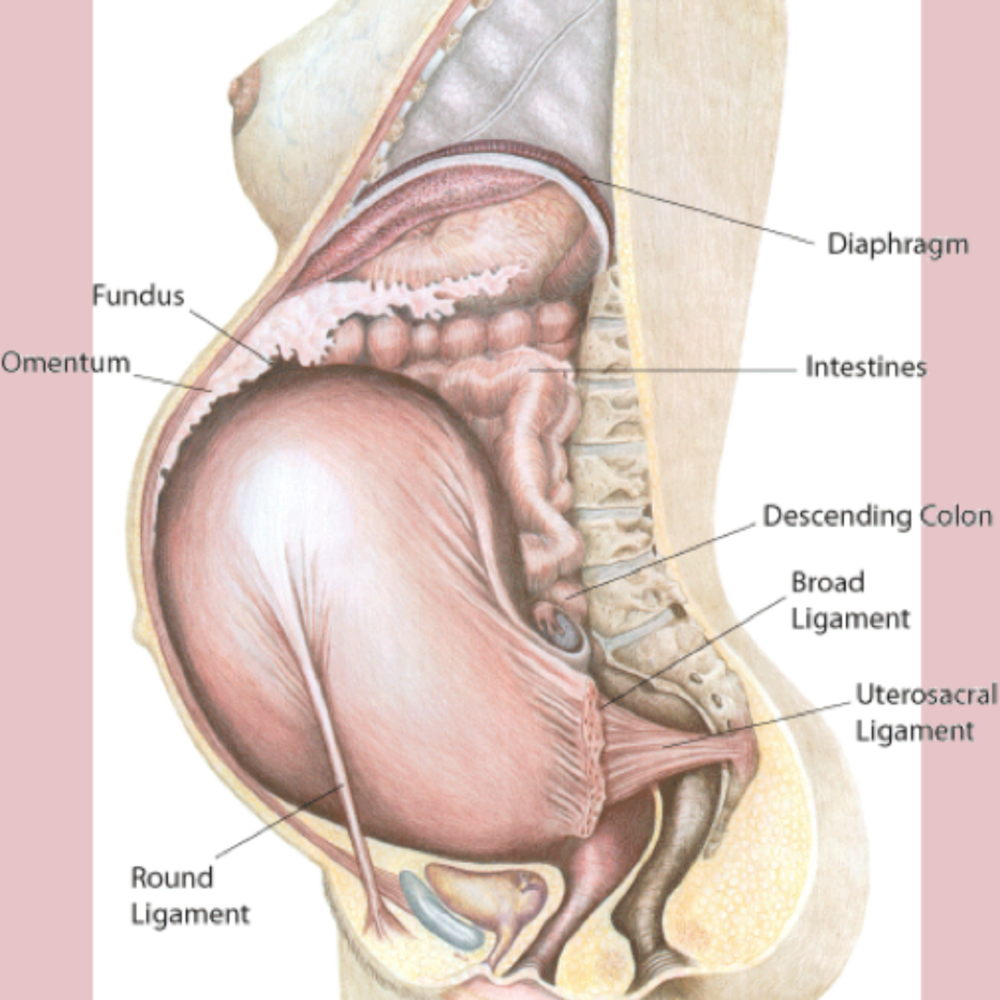
As the uterus grows during pregnancy, these ligaments can become pinched, tight, or torqued in one or more areas. Performing forward leaning inversions can create length and space for the uterus to “right” itself, increasing maternal comfort as well as creating space for baby to move which can be particularly helpful as labor nears so baby can find optimal positioning for birth.
When should you perform forward leaning inversions? Any time after 30 weeks is a good time to begin. If baby is breech or transverse (sideways), you may want to do several inversions throughout the day to correct the uterine position and create space for baby to turn. Always have someone nearby to spot you in case you get dizzy or lose your balance.
Who shouldn’t do forward leaning inversions? Anyone who has a condition that being upside down is contraindicated for or if you have heartburn, glaucoma, and/or hypertension. As always, seek medical advice from your provider.